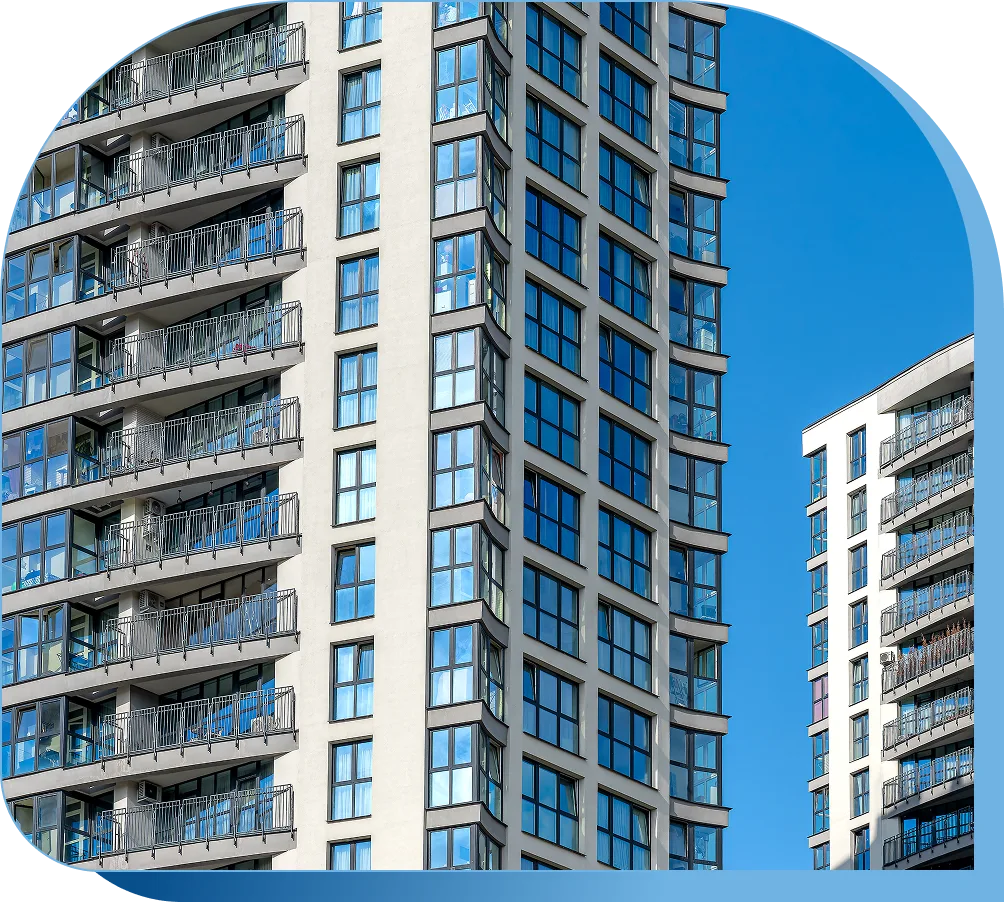
Multi-Unit Residential Buildings Pay for Water That Was Never Used
With hundreds of units, continuous demand, and commercial-grade meters that routinely over-record consumption, the savings opportunity is significant.
Multi-unit residential buildings are among the most consistent and high-volume water users in Canada. Every occupied unit generates daily demand through bathrooms, kitchens, and laundry, and common areas add further consumption on top of individual suites. Property managers and condominium boards have largely treated the resulting water bill as a fixed cost of building operations, something to budget for, not something to change.
The Smart Valve™ changes that assumption. Installed in over 20,000 buildings across North America, the patented flow management technology reduces metered water consumption by 15–35% on average by addressing the root cause of over-billing: air entrainment in commercial water meters. There is no upfront cost, no disruption to residents, and a performance guarantee on every installation. The Canadian Federation of Apartment Associations and ACMO are among the national organizations Canadian Water Savings works with directly.
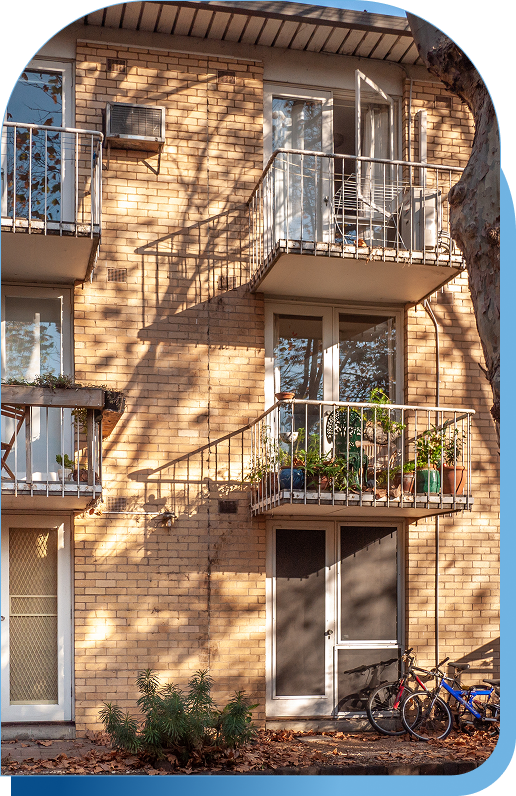
Condominiums
Condominium corporations bear the full cost of common area water use, and a growing share of that cost is for air, not water.

Condominium corporations are responsible for the water bill covering all common areas: hallways, amenity spaces, mechanical rooms, lobbies, parking garages, and outdoor landscaping. In large condominium towers, the common-area consumption is substantial, and it’s subject to the same over-metering that affects every other commercial water system in Canada. Air entrainment and pressure irregularities in the building’s water system cause the meter to record more volume than was actually consumed, and the condominium corporation pays the difference.
The Smart Valve™ installs in the building’s mechanical room and corrects this over-reading at the source. Residents experience no change whatsoever; water pressure, flow rates, and all fixtures continue to operate normally.
For condominium boards looking to reduce operating costs and demonstrate responsible financial stewardship to owners, the Smart Valve™ programme offers a compelling proposition: guaranteed savings, no capital outlay, and an annual inspection programme included at no additional cost. The Canadian Condominium Institute is among the associations with which Canadian Water Savings maintains relationships.
Retirement Homes
Retirement communities operate 24 hours a day, 365 days a year, and their water consumption reflects it.
Retirement homes and long-term care facilities generate continuous water demand driven by resident care routines: bathing, personal hygiene, laundry, food preparation, and housekeeping all run on schedules that don’t stop overnight or on weekends. In larger communities with dining rooms, activity spaces, and outdoor areas, consumption is layered across multiple systems operating simultaneously.
Because residents depend on consistent, reliable services, any water-efficiency solution must work transparently, without affecting pressure, flow, or the quality of services delivered to residents. The Smart Valve™ meets this requirement exactly. It installs in the mechanical room, requires no changes to plumbing fixtures or building systems, and delivers its savings entirely through correcting how the meter reads consumption.
With a guaranteed 15–35% reduction and no disruption to resident services, the Smart Valve™ programme enables retirement home operators to reduce a significant operating cost without trade-offs in care quality or resident experience. The programme’s performance guarantee means there is genuinely no risk to the facility.

See If Your Property
Qualifies for 15%–35% Water Savings
If your building has high water usage, a water bill review is the first step in determining whether system-level optimization is a good fit.
There is no obligation to proceed beyond the review. The goal is simple: determine whether meaningful, measurable water savings are achievable for your property.
Qualified businesses must spend over $2,000 CAD per month on average on water and sewage.