Most water savings programs measure results in a straightforward way: compare consumption before installation to consumption after, and report the difference. That approach works well when a building’s water use is relatively stable from year to year. But what happens when a property is already experiencing rising demand before the Smart Valve™ is even installed? That’s precisely the situation at 21 & 23 Carlton Street, and it makes this case study one of the most instructive in the Canadian Water Savings portfolio.
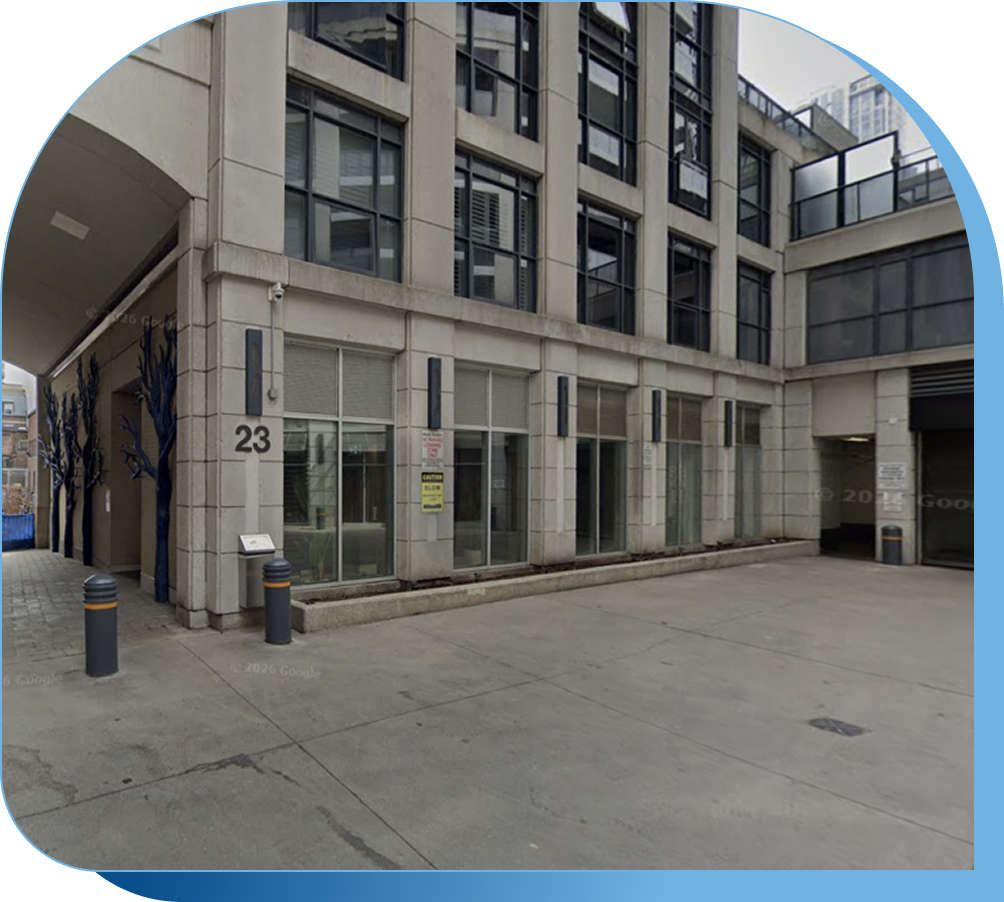
21 & 23 Carlton Street is a residential condominium complex in the heart of downtown Toronto. High-density residential buildings in Toronto’s core face some of the country’s most acute water pressure, both literally and financially. Aging infrastructure, high occupancy, and continuous usage across hundreds of units create conditions where water meters are particularly susceptible to over-recording air and pressure-driven volume that residents never actually use.
In the four months leading up to the Smart Valve™ installation in late June 2018, B.M.I. conducted a detailed analysis of year-over-year water demand at the property. The findings were striking: compared to the same months in 2017, consumption had increased by an average of 16.25%. March was up 17%. May was up 20%. The building’s water costs were growing, not because of any single identifiable cause, but because of the compounding inefficiencies that affect virtually every high-rise building without a flow management solution in place.
The Smart Valve™ was installed at the end of June 2018. The effect was immediate. In July, the first full month post-installation, the year-over-year increase collapsed from an average of 16.25% down to just 4%. In August, it fell further to 3%. Without the Smart Valve™, B.M.I.’s modelling projected that July and August 2018 would have continued the same upward trajectory as the preceding months. Instead, consumption was brought back nearly to 2017 levels, effectively neutralizing more than 15 percentage points of demand growth in a single month.
| Month | 2017 (m³) | 2018 (m³) | Year-Over-Year Change |
| March | 4,676 | 5,489 | +17% |
| April | 4,499 | 5,010 | +11% |
| May | 4,447 | 5,332 | +20% |
| June | 4,889 | 5,737 | +17% |
| July — Smart Valve™ installed | 5,389 | 5,612 | +4% |
| August | 5,238 | 5,420 | +3% |
The data tells a clear story. For four months straight, water demand was accelerating well beyond prior-year levels. Within weeks of the Smart Valve™ installation, that trajectory reversed. This is a particularly important result for condominium corporations and property managers who are dealing not just with high water bills, but with bills that are actively getting worse year over year.